

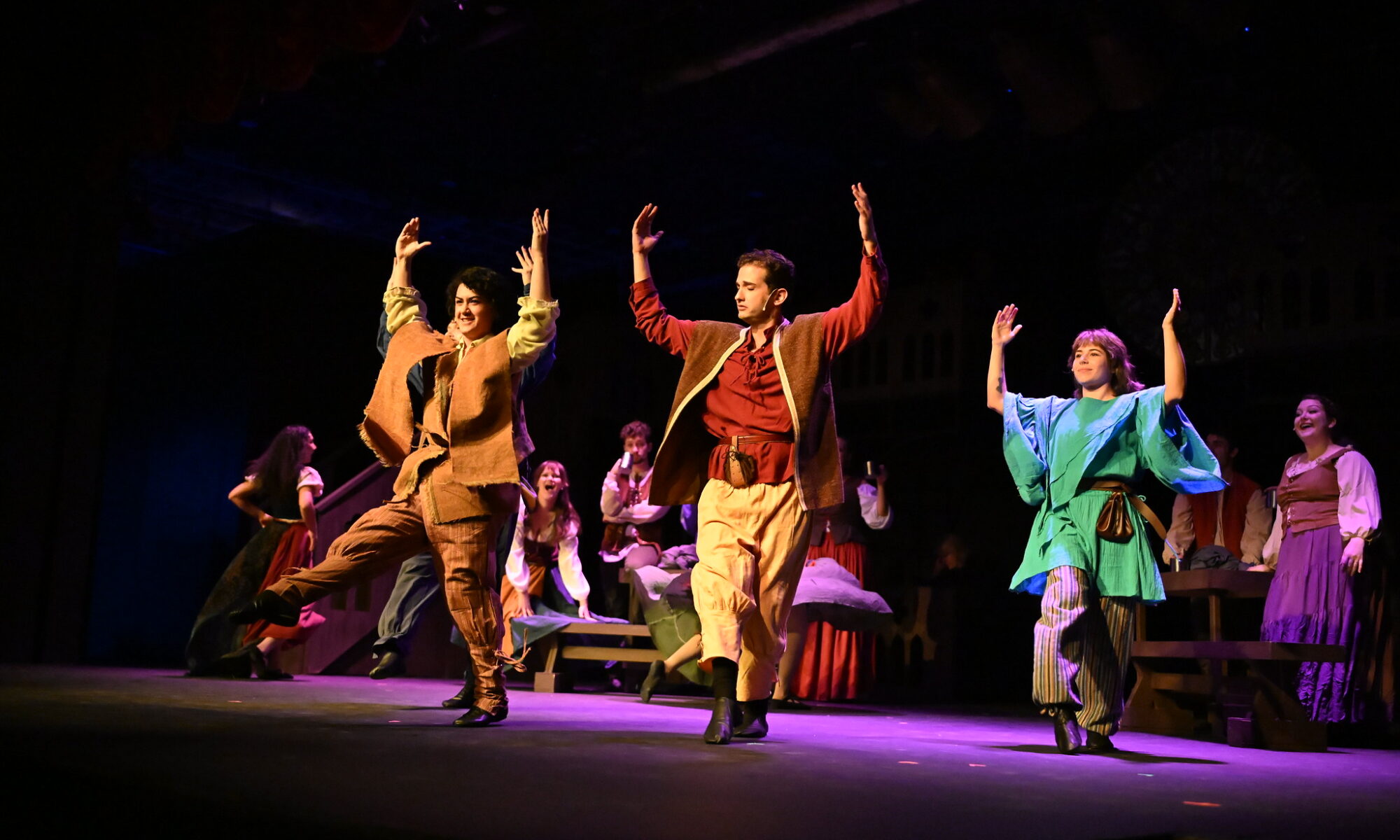
You are coming to see a show, spending about 2 hours, having a wonderful time watching performers and go home, carrying some new experiences, feelings and thoughts. But for people on and backstage it’s a result of their extremely hard work, numerous rehearsals at the theatre and home. And a lot of thought about their characters, performances, and their place in the show. Every show is an extraordinary team effort. Together they are doing an amazing job.
We talked to some of our Hunchback actors about what they hope to convey with their performance.
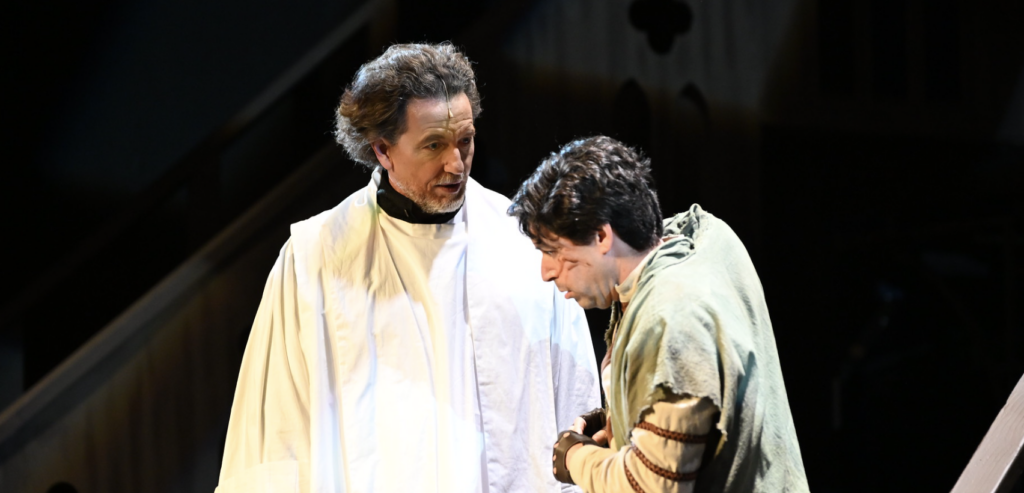
John Gaston (Claude Frollo)
Frollo is clearly the villain of the story, but I’ve found that you can’t effectively play a villain by simply trying to be evil. Frollo believes he’s doing the right thing, even when his actions are terribly wrong. His beliefs, prejudices, and personal struggles shape how he sees the world and justify his behavior in his own mind. I hope audiences see more than a stereotypical bad guy. I hope they recognize a complicated human being—and perhaps reflect on how easily misguided convictions can lead ordinary people, particularly those in positions of power, to do extraordinary harm.
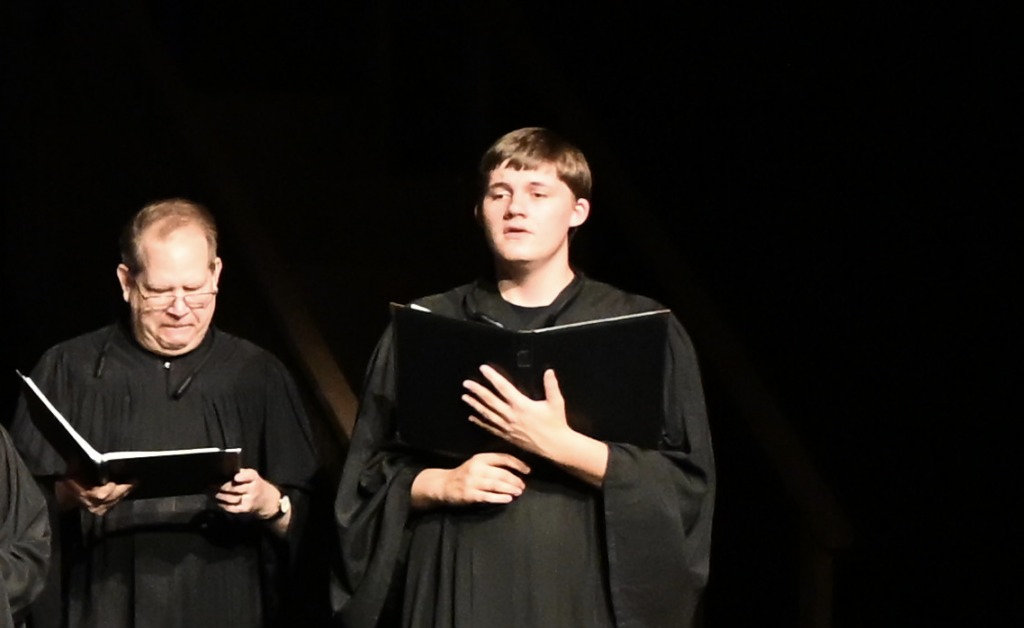
Caelan Anderson (Choir)
As a member of the choir, I don’t do much acting in the show, so the biggest thing which I (and the rest of the choir) can convey to the rest of the audience is the music. Specifically I feel that everything we sing in Latin (especially the Entr’acte) are drastically different from the large majority of musical theater songs and learn more towards classical singing, and thus the choir in Hunchback serves as a blending of two styles which helps to further emphasize the contrasting viewpoints between characters in the story, most notably the church (with Frollo in particular at its head) and the gypsies (the classical, choral, religious traditional choir music vs. the more lively and traditional musical theater music of songs like topsy turvy).
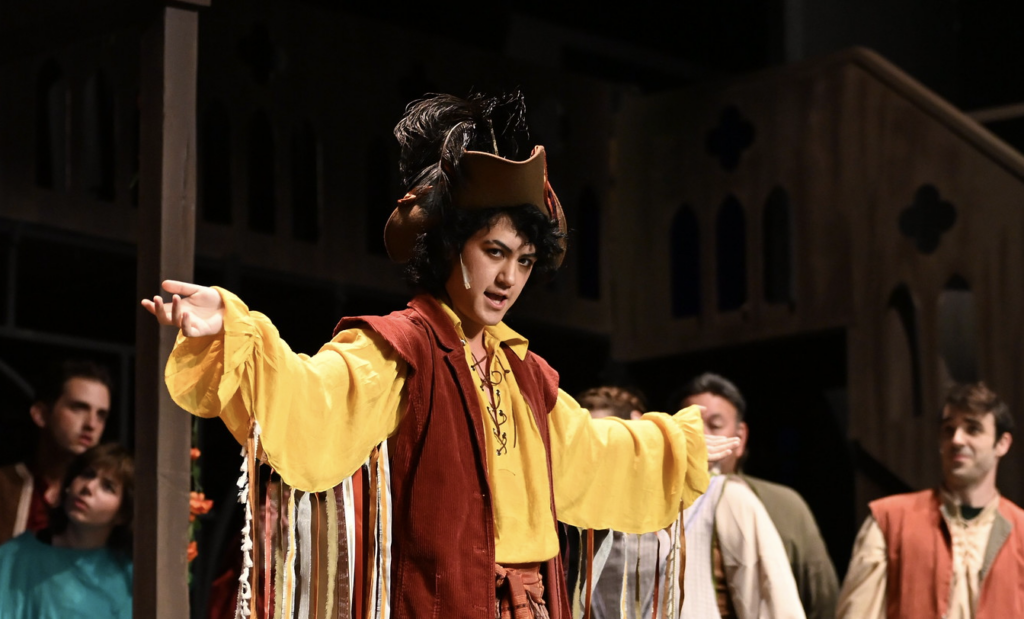
Nickolas Kepe (Clopin)
I hope to convey to the audience that we can always strive to make the world a better place. One line I sing in the show always pulls on my heartstrings: “Could there be a country, kinder to our race?” Hunchback’s main story driver is the racial prejudice and racism the Romani people face. The vocal line I sing is also applicable to the many people who are still faced with discrimination in today’s time. I call attention to this because racial discrimination is an issue that continues to grow amidst our current political climate. However, even though the hardship the Romani people face in the musical, the story of The Hunchback of Notre Dame embeds a desire for a better world. It would be a shame not to highlight the hope for a kinder world that Esmeralda shares. Her song “Someday” will always move me. She sings of a fairer life, a place where greed will not pay, a dream she hopes will someday be real. I want our performance to inspire the audience to strive for a better world and fill them with the hope of a kinder place.